
Genes explain only about a quarter of how long a person lives, according to a well-known study of Danish twins, and the rest comes down largely to how and where we live.[1] The world’s blue zones regions put that finding into everyday terms. In Okinawa, Japan; Sardinia, Italy; Nicoya, Costa Rica; Ikaria, Greece; and Loma Linda, California, people commonly live into their 90s and past 100 while still gardening, walking to see neighbors, and cooking for their families.
People in these communities stay healthy through ordinary daily routines, and Blue Zones organizes those routines into four pillars: Move Naturally, Eat Wisely, Right Outlook, and Connect. Each section below covers one pillar, the research behind it, and simple steps you can start this month, at any age.
Move Naturally

In the blue zones regions, people rarely set aside time to exercise, because their days already keep them moving. Sardinian shepherds walk miles of hilly terrain with their flocks, Okinawan elders tend their gardens well into their 90s, and in Ikaria, getting almost anywhere means walking up a steep hill.
That steady, everyday movement adds up: in an analysis of 15 studies, the more steps adults 60 and older took each day, the lower their risk of dying, with the benefit leveling off at around 6,000 to 8,000 steps.[2] Regular movement also keeps your legs strong and your balance steady, which lowers your risk of falls.
Simple steps to try:
- Take a 10-minute walk after one meal each day.
- Plant a small garden or a few pots of herbs, since digging, bending, and watering all count as movement.
- Stand up and move around during TV commercial breaks or between episodes.
- Practice standing up from a chair without using your hands a few times a day, holding onto a sturdy surface if you need to.
Eat Wisely

Diets in the blue zones regions vary from place to place, and plants fill most of the plate in every one of them. Beans are on the table in every region, from black beans in Nicoya to soybeans in Okinawa, and many of these communities eat meat only a few times a month, usually in small portions.
Okinawans also follow an old saying, hara hachi bu, a reminder to stop eating when they are about 80 percent full. Stopping a little early gives your body time to register fullness, which often arrives several minutes after your last bite.
Simple steps to try:
- Add a half cup of beans to one meal a day, in soup, salad, tacos, or on toast.
- Fill half your plate with vegetables at lunch and dinner.
- Put your fork down between bites, and stop when you feel about 80 percent full.
- Make dinner the smallest meal of your day.
This month’s recipe, calabacitas with black beans, covers two of these steps in one skillet.
Right Outlook

People in the blue zones regions have words for the reason they get up in the morning: Okinawans call it ikigai, and in Nicoya, it’s plan de vida. Research supports this: in a study of nearly 7,000 U.S. adults over 50, those with the strongest sense of purpose were less likely to die over the following years than those with the weakest.[3]
Right Outlook also means making time to downshift. Every blue zones region has a daily ritual for shedding stress, such as prayer among Adventists in Loma Linda, an afternoon nap in Ikaria, or happy hour with friends in Sardinia. Chronic stress raises blood pressure and disrupts sleep, and a few quiet minutes each day give your body a chance to reset.
Simple steps to try:
- Write down one or two things that give your days meaning, like family, faith, volunteering, or a favorite hobby.
- Set aside 10 minutes a day for something that calms you, like prayer, deep breathing, or sitting outside.
- Rest when you need to, including a short afternoon nap.
- Try a free Gentle Yoga or Mindfulness and Breathwork class from Blue Zones Health.
Connect
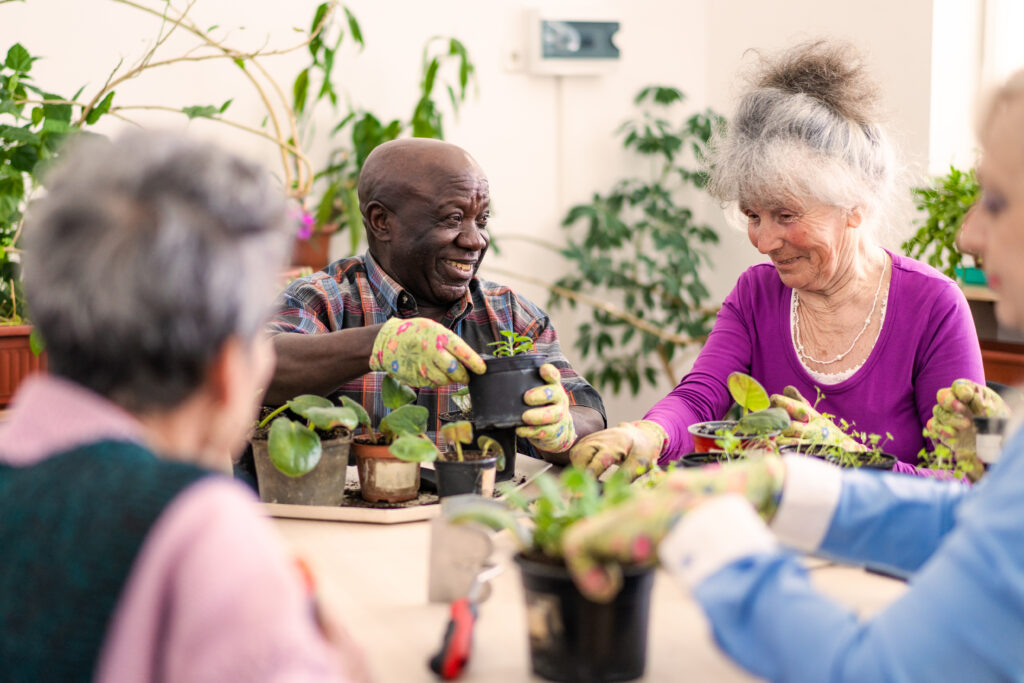
In Okinawa, many people belong to a moai, a small group of friends who meet regularly and support each other, sometimes for decades. Across the blue zones regions, people keep family close, care for aging parents at home, and belong to faith or community groups.
These ties protect health as people age. A review of 148 studies found that people with strong social relationships had about a 50 percent greater likelihood of survival than those with weaker ties.[4]
Simple steps to try:
- Join one of our walking Moai™ groups, listed on the community events calendar.
- Schedule a standing weekly phone call or coffee date with a friend or family member.
- Bring a friend to one of our approved community programs.
- Volunteer at a place of worship, school, or community center near you.
Start with One Step
You can start with any one pillar; the others can wait. Pick one step from this guide, try it for a week, and add another once the first becomes part of your routine.
Your Well-Being Advisor can help you choose where to begin and connect you with free classes, walking groups, and community programs that fit your schedule.
Schedule a Session with a Well-Being Advisor
View the Community Events Calendar
References
- Herskind AM, McGue M, Holm NV, Sørensen TIA, Harvald B, Vaupel JW. The heritability of human longevity: a population-based study of 2872 Danish twin pairs born 1870–1900. Human Genetics. 1996;97(3):319-323. https://pubmed.ncbi.nlm.nih.gov/8786073/
- Paluch AE, Bajpai S, Bassett DR, et al. Daily steps and all-cause mortality: a meta-analysis of 15 international cohorts. The Lancet Public Health. 2022;7(3):e219-e228. https://www.thelancet.com/journals/lanpub/article/PIIS2468-2667(21)00302-9/fulltext
- Alimujiang A, Wiensch A, Boss J, et al. Association between life purpose and mortality among US adults older than 50 years. JAMA Network Open. 2019;2(5):e194270. https://jamanetwork.com/journals/jamanetworkopen/fullarticle/2734064
- Holt-Lunstad J, Smith TB, Layton JB. Social relationships and mortality risk: a meta-analytic review. PLOS Medicine. 2010;7(7):e1000316. https://journals.plos.org/plosmedicine/article?id=10.1371/journal.pmed.1000316